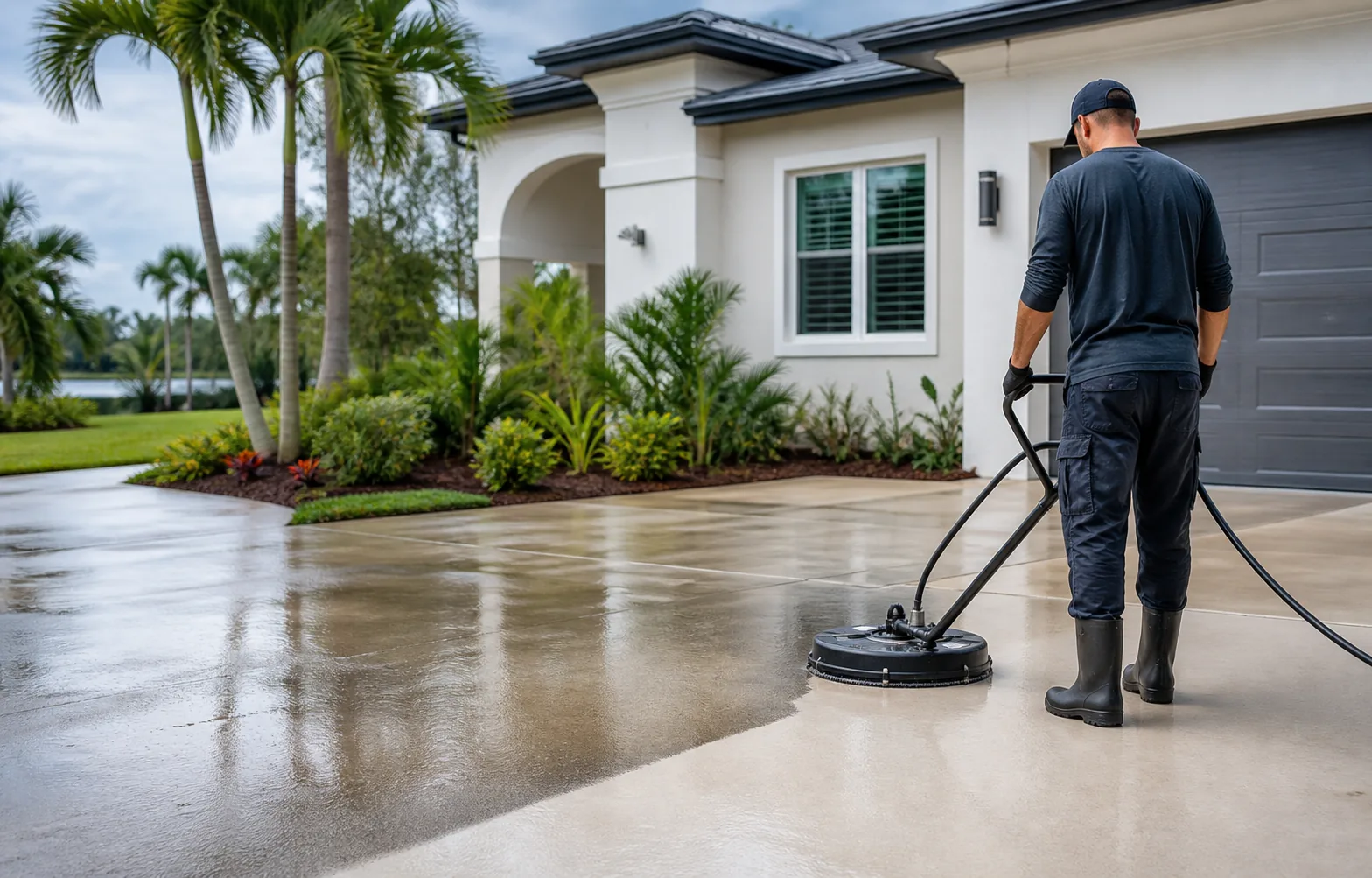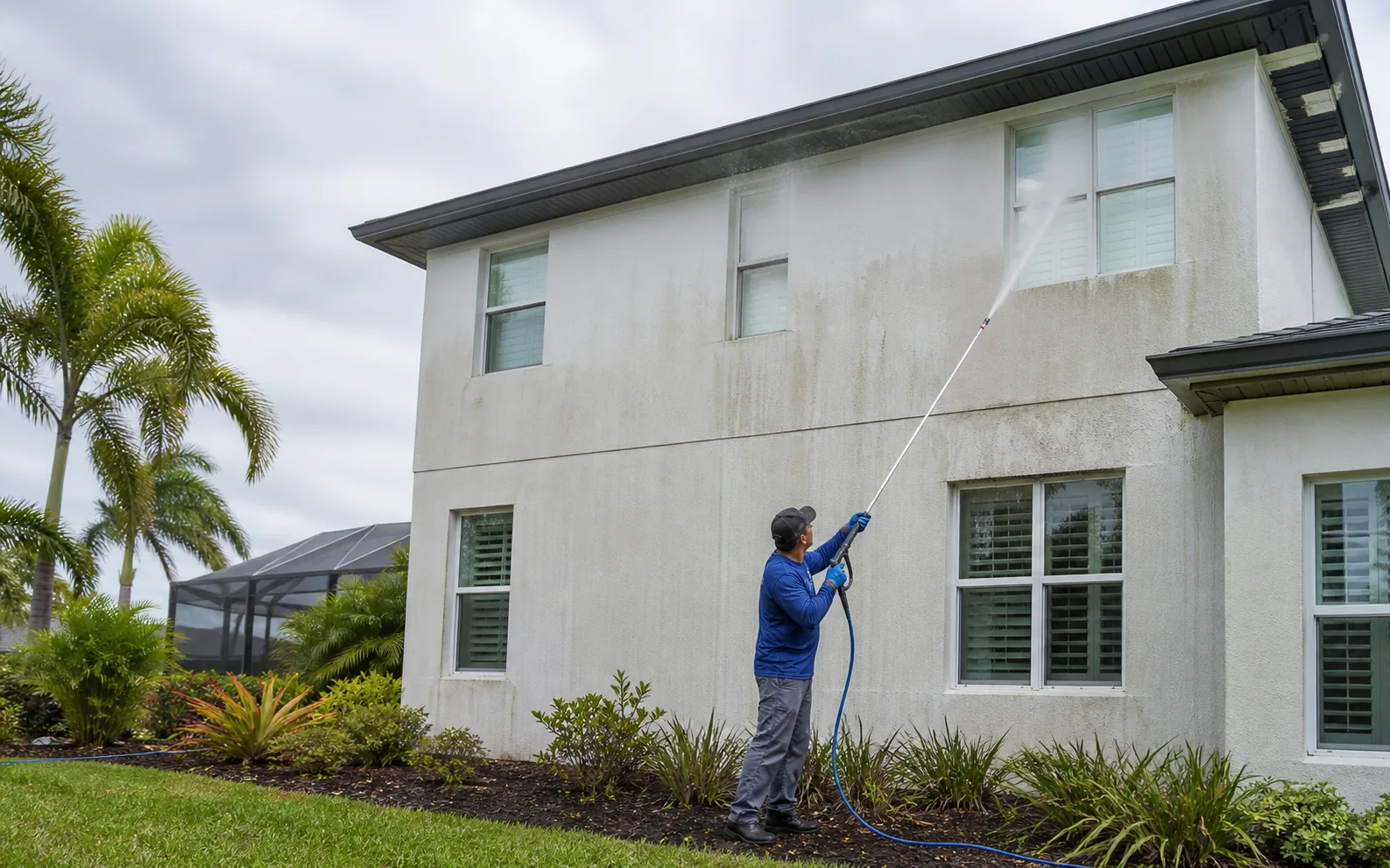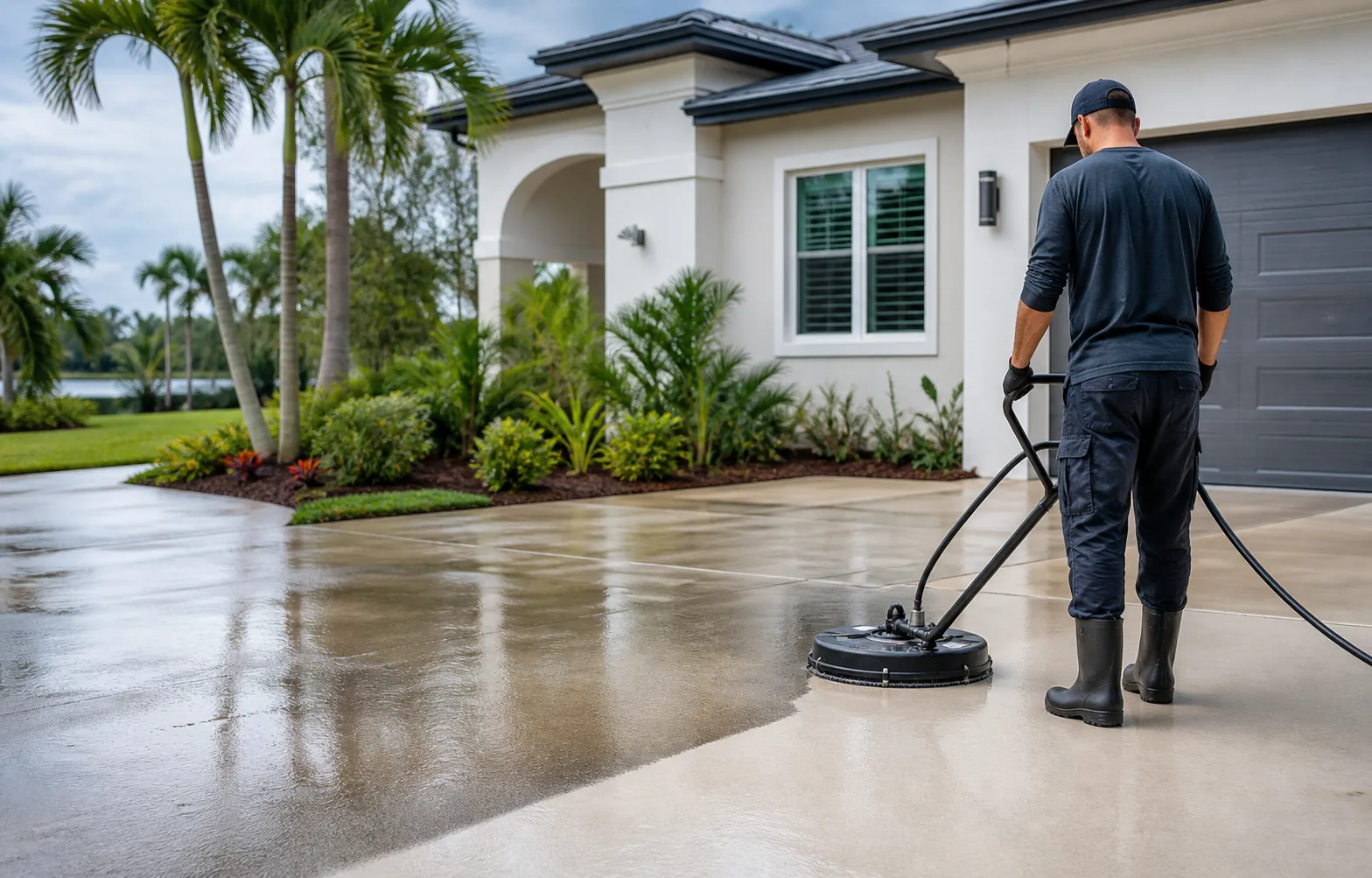
Operations-aware planning
Access, opening hours, pedestrians, tenants, deliveries, and wet-surface controls are considered before scheduling.
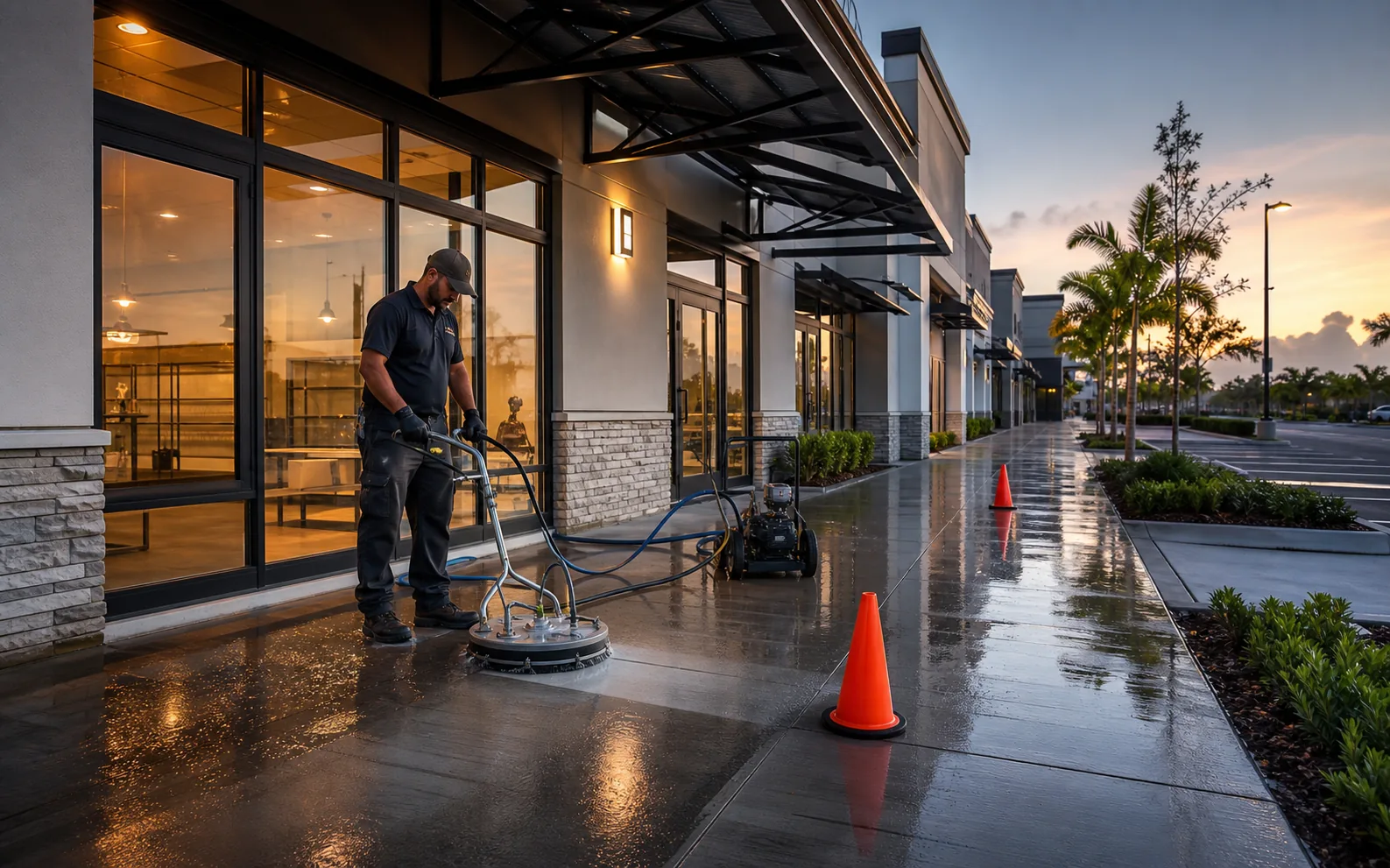
Commercial exterior cleaning helps present a more cared-for property while addressing the practical realities of foot traffic, operating hours, tenant access, safety, and recurring maintenance.
Taylor plans commercial work around the surfaces, current condition, water access, pedestrian routes, tenants, doors, displays, landscaping, drainage, and the hours when cleaning creates the least disruption. The scope may include compatible sidewalks, entries, service areas, walls, curbs, breezeways, or common exterior spaces. Grease, oil, gum, rust, paint, and regulated runoff can require separate evaluation.
Bradenton and surrounding Gulf Coast commercial properties face humidity, rain, year-round foot traffic, landscaping residue, and exterior growth. Shaded walkways and north-facing walls often show buildup first. A defined maintenance scope can keep high-visibility areas more consistent, but frequency depends on traffic, exposure, tenants, and property standards.
Access, opening hours, pedestrians, tenants, deliveries, and wet-surface controls are considered before scheduling.
Entries, walks, curbs, walls, service areas, and common spaces are listed so priorities and exclusions are clear.
One-time cleaning can be documented in a way that makes future condition reviews and repeat scopes easier.
Every property is different. The estimate identifies the exact surfaces, preparation, method, access, and exclusions for the project.
The sequence is adjusted to the property, but the purpose stays the same: understand the surface, protect the surroundings, clean methodically, and check the result.
Taylor identifies priority zones, surfaces, stains, water access, drains, doors, public routes, tenants, landscaping, and timing constraints.
Areas, exclusions, schedule assumptions, access responsibilities, and any specialty concerns are clarified before service.
The work zone is organized for the site, then surfaces are cleaned in a sequence designed to limit disruption and repeat runoff.
The agreed areas are rinsed and checked before controls are removed and the completion is reviewed with the property contact.
Not sure which cleaning method fits your surface? Share the property address, photos, material, and the problem you want solved. Taylor will confirm the next step.
Ask about your project →These answers explain common decisions and limitations. The property-specific estimate controls the final scope.
Scheduling depends on location, scope, lighting, access, water availability, noise limits, and Taylor’s availability. Share the property’s operating hours and restrictions during the estimate request.
Ask Taylor about current recurring-service availability. A site review can identify priority zones and a repeatable scope, but no maintenance frequency should be assumed until it is confirmed in writing.
Those conditions may require specialized products, heat, recovery methods, or separate treatment and may not be fully removable. They should be identified during the site review rather than included under general washing by default.
Provide the property address, decision-maker contact, surface list, approximate area, operating hours, water access, photos, known stains, drainage concerns, and any vendor or insurance requirements.
Tell us which surfaces need attention. Taylor will confirm the service area, review the scope, and explain the next step.