House-safe method
The cleaning approach is adjusted for coatings, seals, penetrations, and vertical materials.
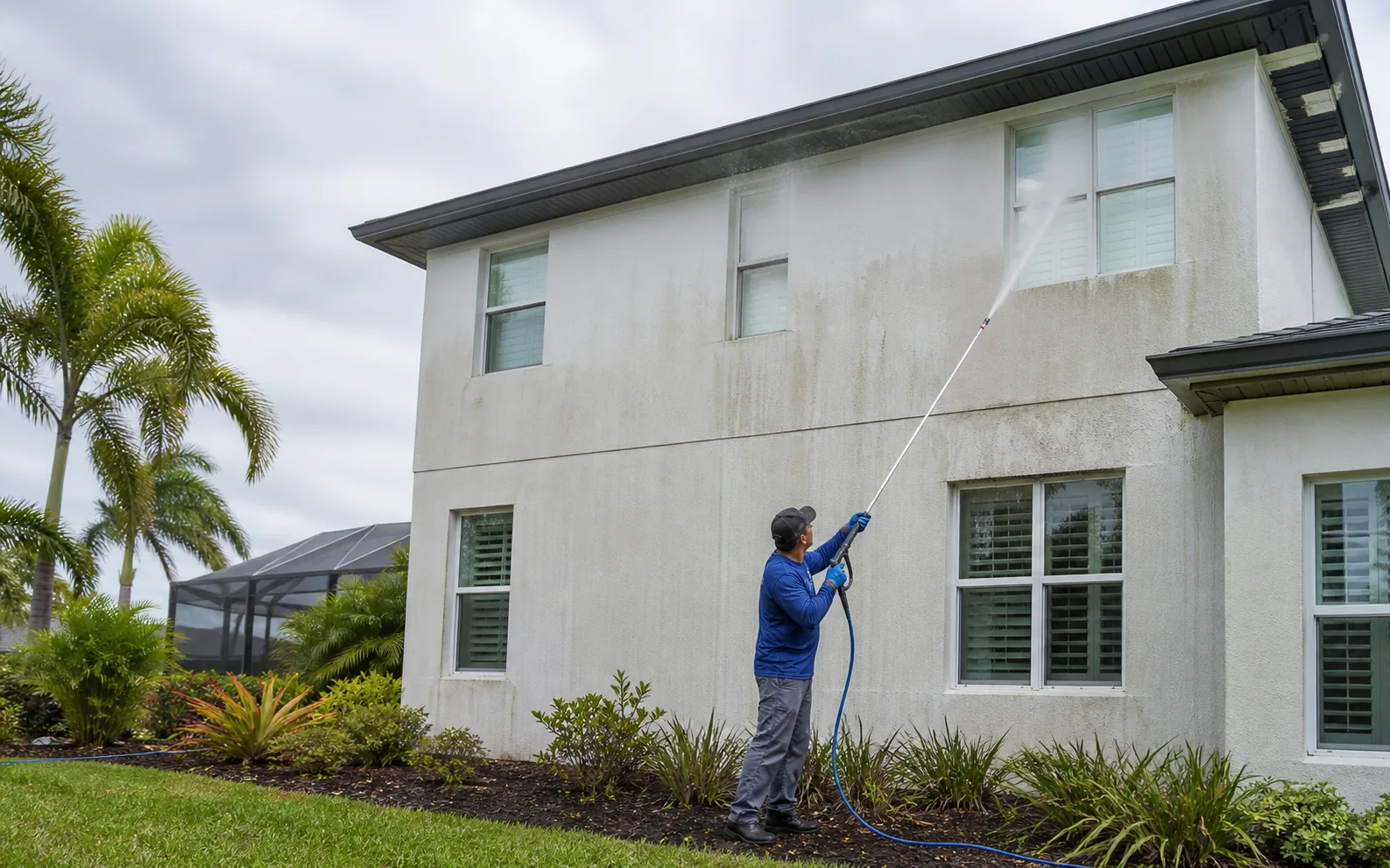
House washing targets the film, algae, mildew-like growth, cobwebs, and environmental soil that collect across exterior walls and trim—without treating the home like a driveway.
Exterior house cleaning typically relies on lower pressure, cleaner dwell time, and a thorough rinse rather than aggressive force. Taylor looks at stucco or siding condition, paint, seals, windows, vents, fixtures, landscaping, and access before work. The cleaning scope can include the main wall fields plus reachable soffits, fascia, exterior trim, and other specifically listed surfaces.
Warm, humid Gulf Coast conditions are friendly to recurring organic growth, especially on shaded elevations and areas that dry slowly. Salt carried inland, wind-driven rain, irrigation overspray, and dense landscaping can add to exterior film. Regular inspection and appropriate washing can refresh the home without assuming that every mark is cleanable or that damaged coatings can be restored by washing alone.
The cleaning approach is adjusted for coatings, seals, penetrations, and vertical materials.
Windows, doors, vents, exterior outlets, cameras, and fixtures are identified before rinsing begins.
A planned sequence helps prevent dirty runoff from being left over already cleaned lower surfaces.
Every property is different. The estimate identifies the exact surfaces, preparation, method, access, and exclusions for the project.
The sequence is adjusted to the property, but the purpose stays the same: understand the surface, protect the surroundings, clean methodically, and check the result.
Known leaks, oxidation, loose paint, damaged stucco, open penetrations, and sensitive items are identified with the customer.
Windows and doors are confirmed closed, moveable items are cleared, and nearby vegetation receives the protection appropriate to the plan.
The chosen solution and low-pressure method are used in controlled sections, with attention to dwell time and even rinsing.
The exterior is reviewed for missed areas, remaining permanent stains, and any condition that became more visible after cleaning.
Not sure which cleaning method fits your surface? Share the property address, photos, material, and the problem you want solved. Taylor will confirm the next step.
Ask about your project →These answers explain common decisions and limitations. The property-specific estimate controls the final scope.
Not usually. House washing often uses a lower-pressure application and rinse because wall systems, paint, seals, windows, vents, and trim can be damaged by excessive force. The method should be matched to the exterior.
No. Cleaning can remove surface soil and organic growth, but it does not repair chalking paint, oxidation, cracks, failed caulk, water intrusion, or coating failure. Those conditions may become more visible once the exterior is clean.
Access and property details should be arranged before the appointment. Taylor will let you know what access is needed, and you should make sure windows and doors are closed, pets are secure, and exterior items are moved.
There is no single schedule. Shade, irrigation, tree cover, proximity to the coast, paint condition, and how quickly elevations dry all affect buildup. Request an evaluation when growth or film becomes noticeable.
Tell us which surfaces need attention. Taylor will confirm the service area, review the scope, and explain the next step.