Pressure with a purpose
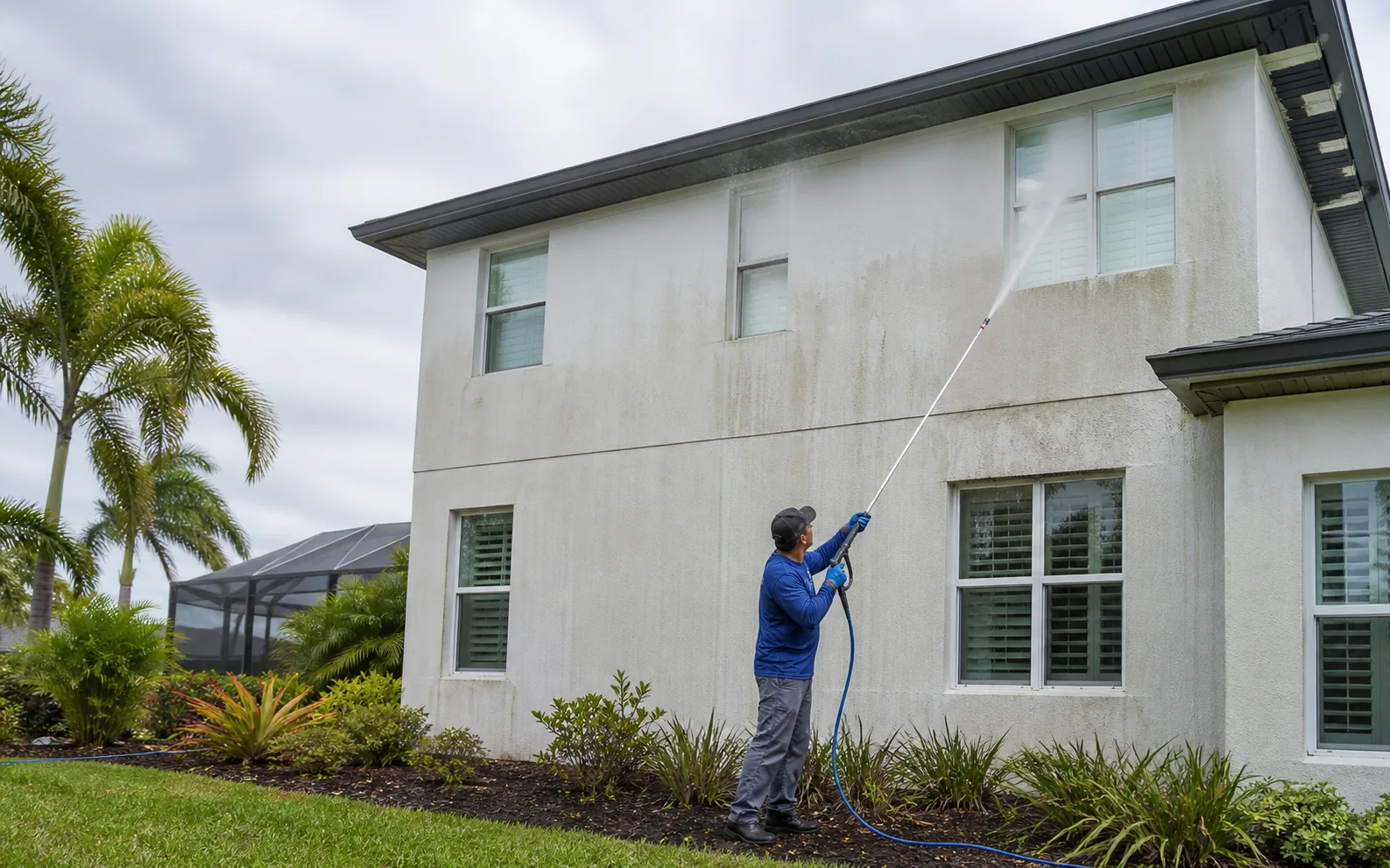
Output, nozzle, distance, and movement are adjusted for the actual surface rather than treated as one setting.
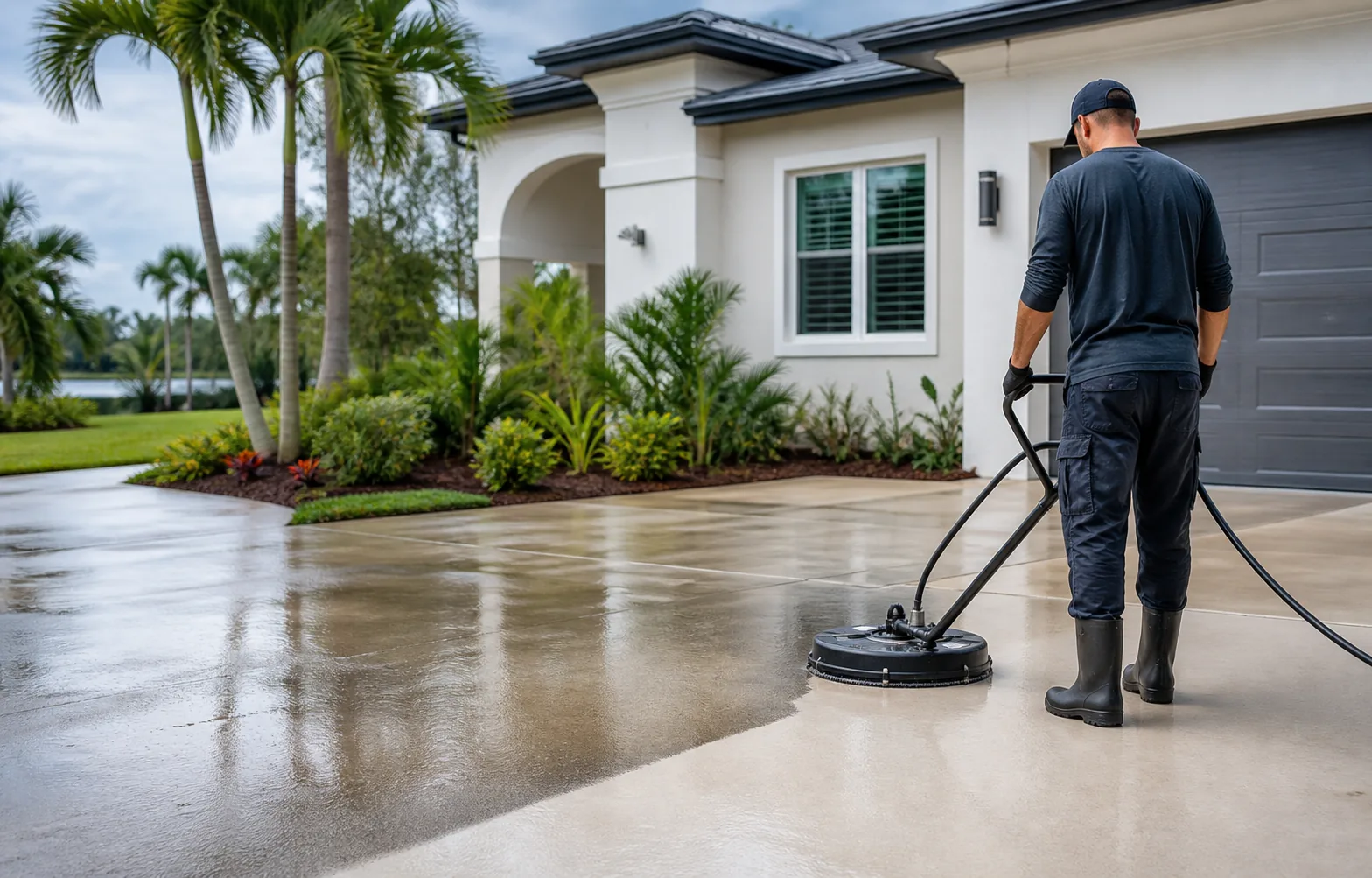
Professional pressure washing uses controlled water pressure, the right nozzle, and surface-specific technique to release dirt and organic buildup from durable outdoor materials.
Pressure washing is best used where the surface can safely accept mechanical cleaning. The goal is not maximum force—it is enough controlled cleaning action to loosen embedded soil without etching, striping, or driving water where it does not belong. Taylor evaluates material, age, condition, drainage, nearby landscaping, and the type of buildup before selecting a method.
Bradenton-area heat, humidity, shade, frequent rain, and irrigation can leave hard exterior surfaces looking dark or uneven. Organic growth also returns faster where surfaces stay damp. A careful cleaning resets the appearance and makes future maintenance easier to evaluate without promising that any outdoor surface will stay clean permanently.
Output, nozzle, distance, and movement are adjusted for the actual surface rather than treated as one setting.
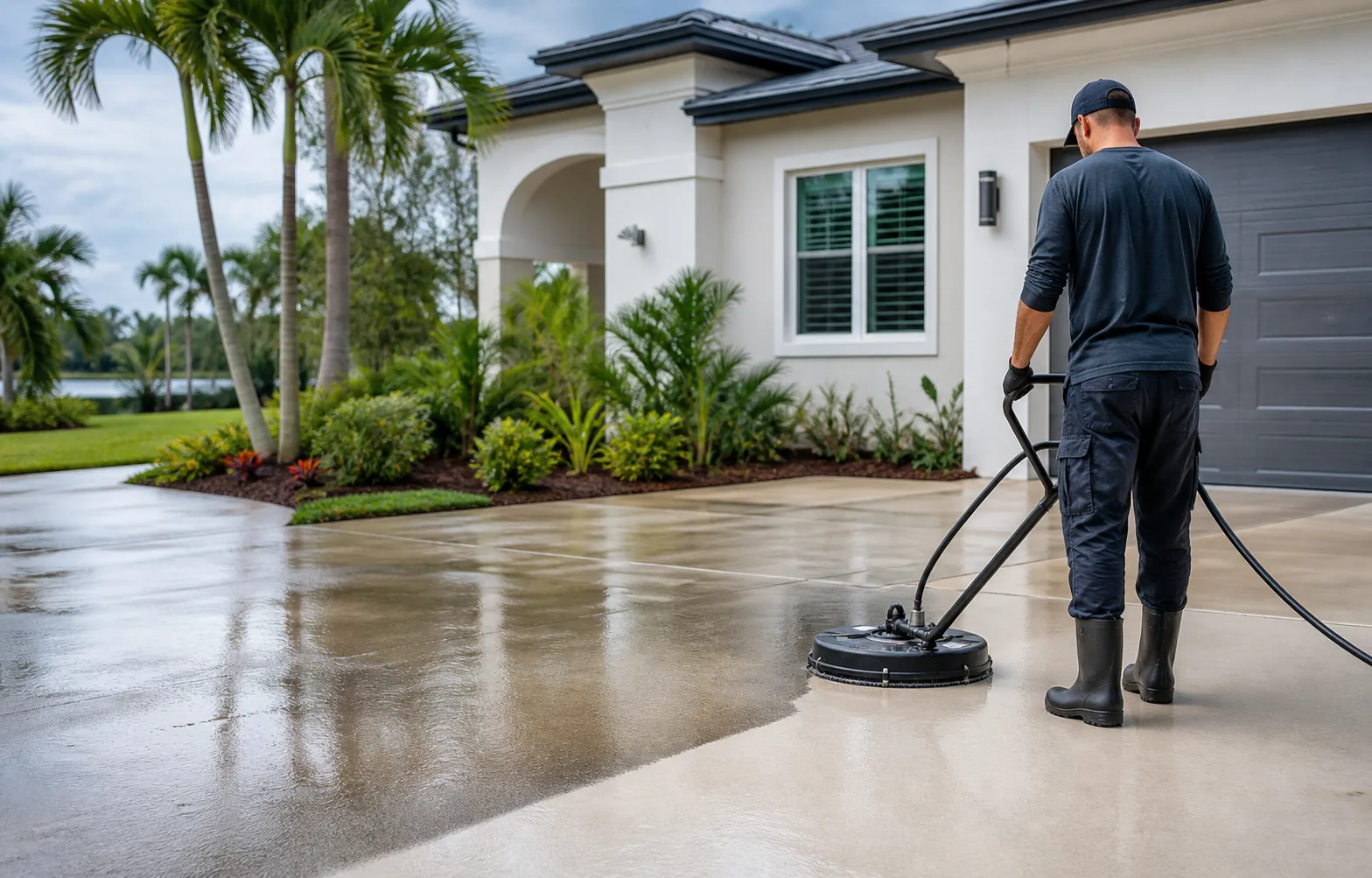
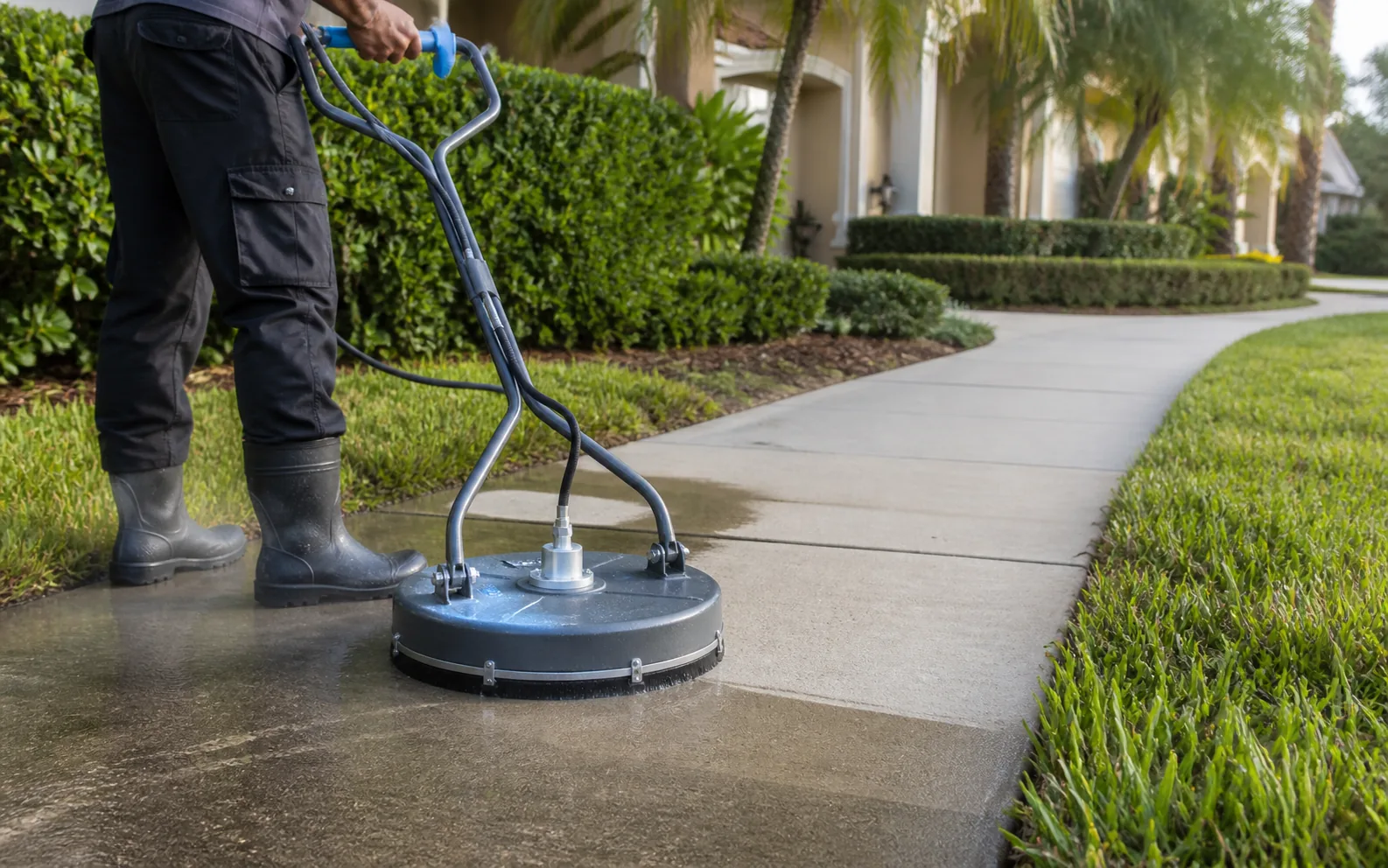
Corners, joints, borders, and runoff paths receive the same careful attention as the open field.
Systematic passes help avoid the obvious wand marks and missed bands that rushed work can leave behind.
Every property is different. The estimate identifies the exact surfaces, preparation, method, access, and exclusions for the project.
The sequence is adjusted to the property, but the purpose stays the same: understand the surface, protect the surroundings, clean methodically, and check the result.
Taylor identifies the material, buildup, cracks, coatings, delicate areas, access, and drainage before work begins.
Moveable belongings are cleared, nearby features are identified, and the cleaning sequence is planned.
Pressure, distance, nozzle pattern, and passes are adjusted while the agreed surfaces are cleaned section by section.
Loose material and cleaner residue are rinsed from the work area, then the finished scope is checked for even coverage.
Not sure which cleaning method fits your surface? Share the property address, photos, material, and the problem you want solved. Taylor will confirm the next step.
Ask about your project →These answers explain common decisions and limitations. The property-specific estimate controls the final scope.
No. High pressure is not appropriate for every material. Painted surfaces, some pavers, aging wood, screens, seals, and building exteriors may need lower pressure or a different cleaning approach. Taylor reviews the surface before choosing the method.
It removes many forms of surface dirt and organic buildup, but rust, oil, fertilizer marks, paint, mineral deposits, and deeply absorbed discoloration may require specialized treatment or may not disappear completely. Existing stains are discussed before cleaning when visible.
Please move small decorations, fragile items, vehicles, and anything that should not get wet. Keep doors and windows closed and identify any known leaks, loose materials, sensitive plants, or non-weatherproof outlets.
Call (941) 268-8916 or use the quote form with your address, the surfaces you want cleaned, and any useful photos. Taylor will confirm the next step and project scope before scheduling.
Tell us which surfaces need attention. Taylor will confirm the service area, review the scope, and explain the next step.