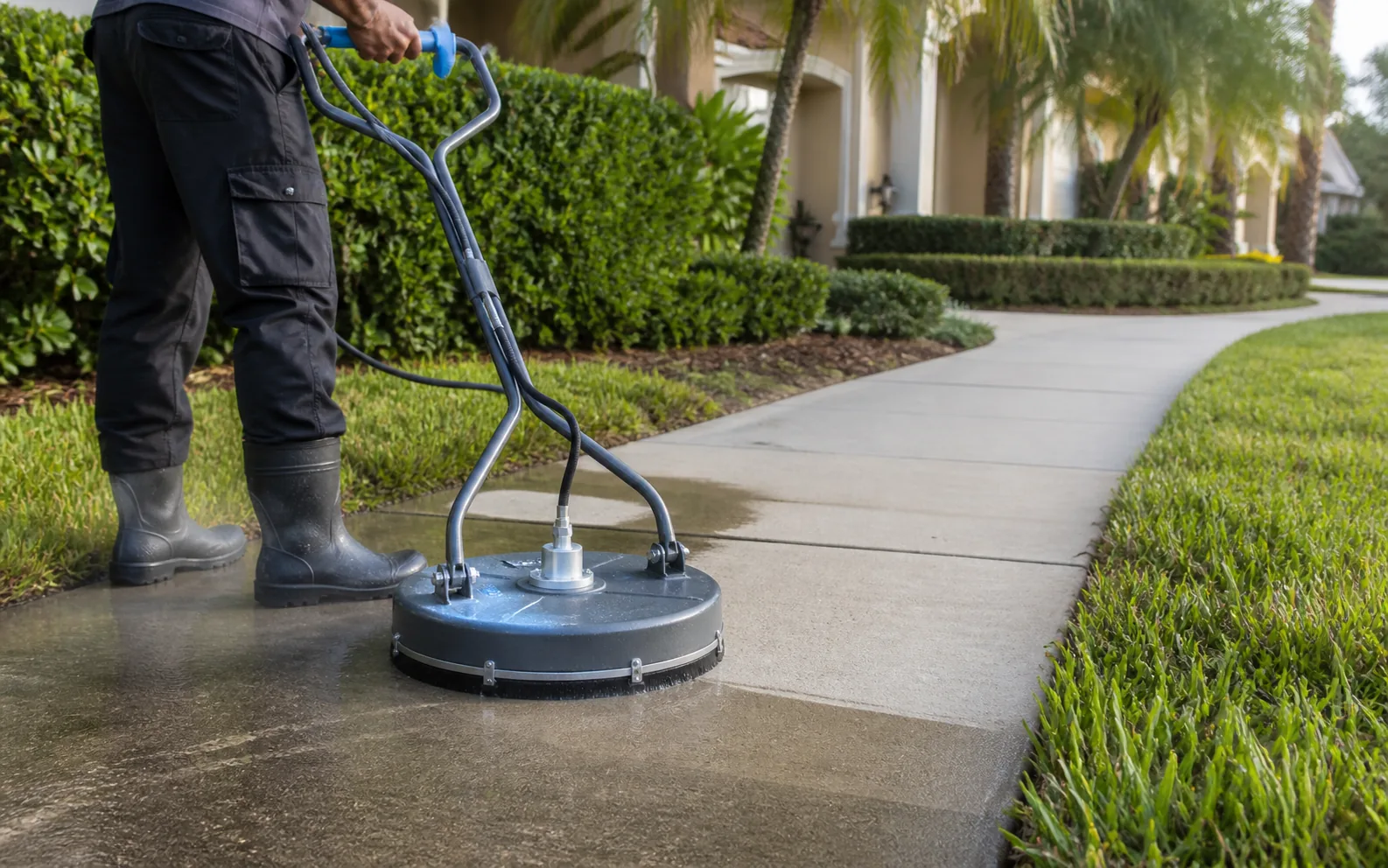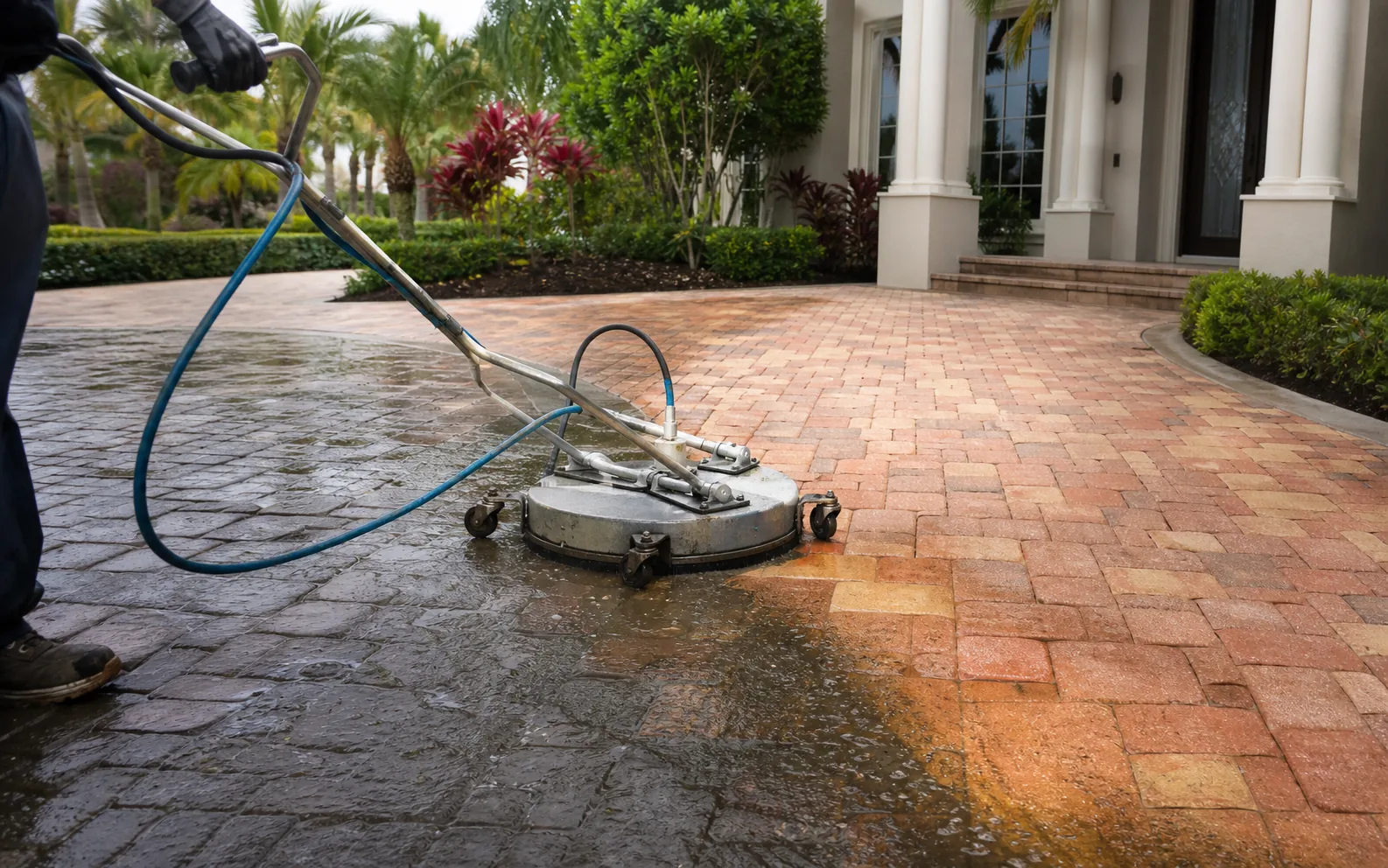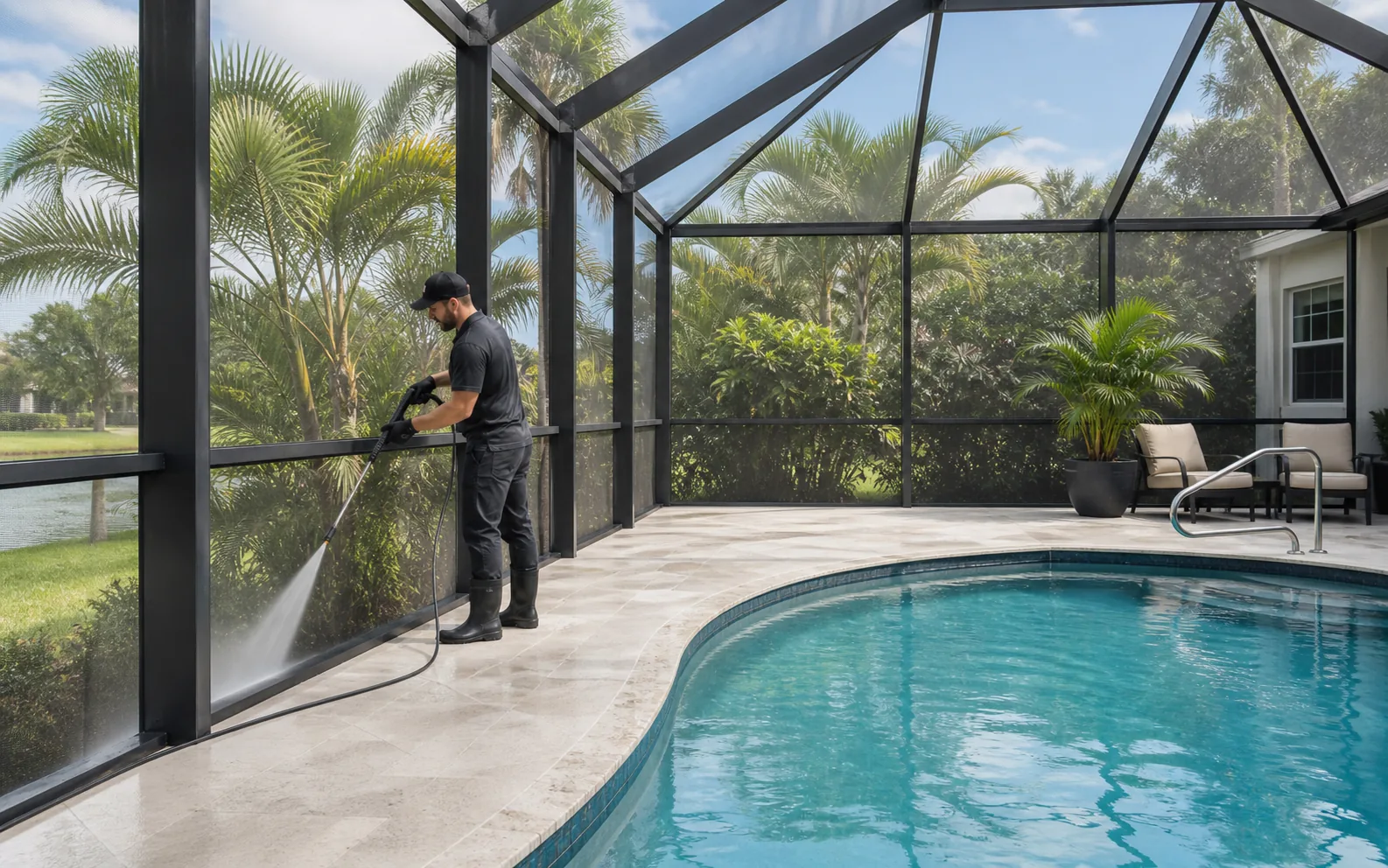
Even cleaning lanes
Systematic surface-cleaner passes help limit the striping caused by inconsistent wand movement.
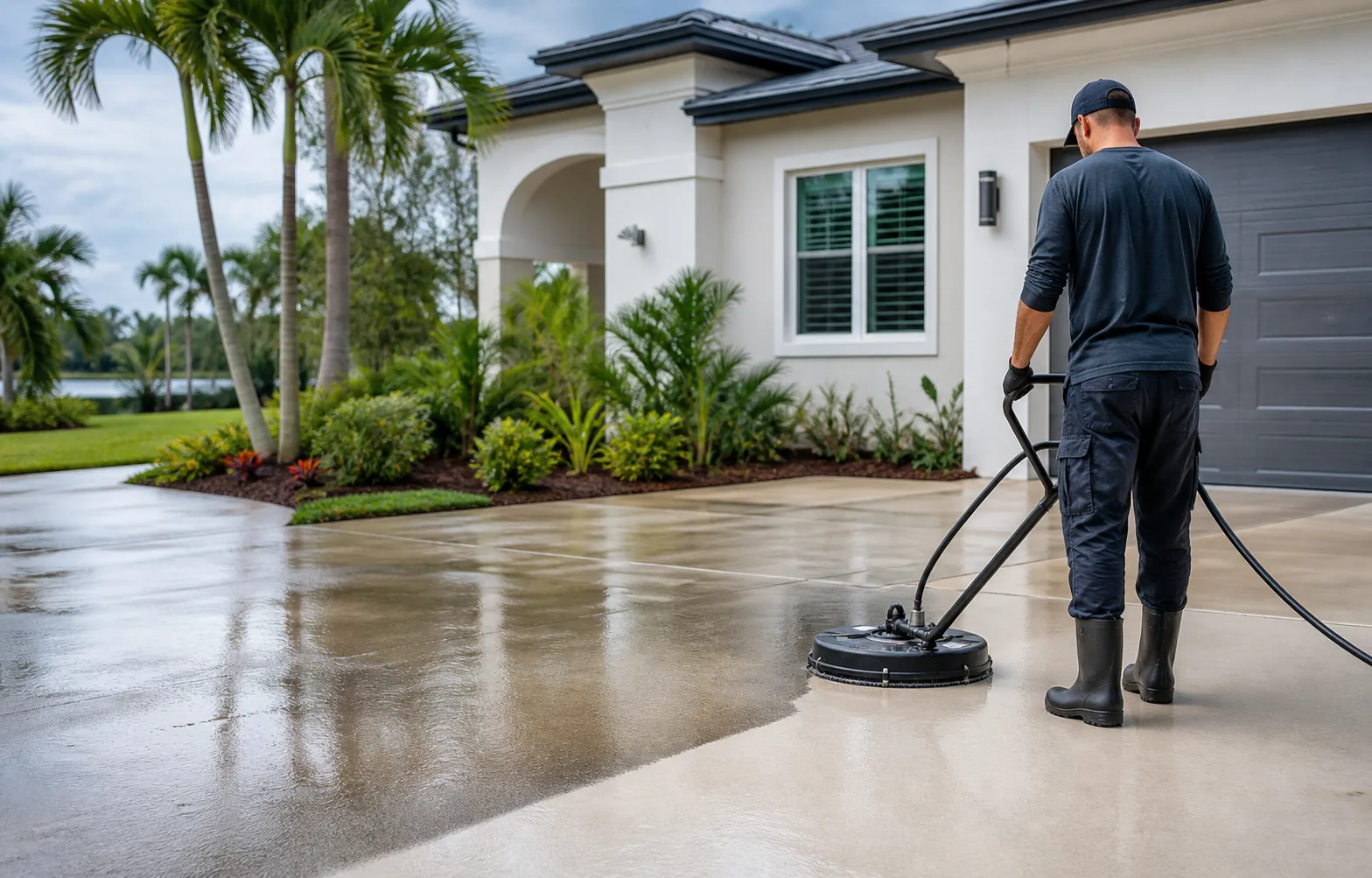
Driveway cleaning removes general traffic film, soil, leaf residue, irrigation marks, and organic buildup from the hard surface that frames a home’s first impression.
Taylor reviews the driveway material, cracks, repairs, coatings, drainage, borders, oil or rust marks, and nearby vehicles before selecting the cleaning method. A rotary surface cleaner can provide more consistent coverage across open sections, while controlled detail work addresses edges, joints, and the garage apron included in the estimate.
Bradenton driveways face year-round sun, rain, irrigation, sandy soil, vehicle traffic, and shaded edges that can remain damp. Cleaning can improve the overall appearance, but absorbed stains, aggregate variation, repairs, and existing surface damage may remain visible.
Systematic surface-cleaner passes help limit the striping caused by inconsistent wand movement.
Panels, borders, joints, and the garage apron are identified before work starts.
The cleaning sequence accounts for slope, landscaping, garage doors, and the street edge.
Every property is different. The estimate identifies the exact surfaces, preparation, method, access, and exclusions for the project.
The sequence is adjusted to the property, but the purpose stays the same: understand the surface, protect the surroundings, clean methodically, and check the result.
Taylor identifies the surface, coatings, repairs, stains, access, borders, and drainage.
Vehicles and moveable belongings are relocated before equipment and water are introduced.
Open panels are cleaned methodically, followed by controlled work at edges and joints.
Loose residue is rinsed away and permanent or absorbed marks are identified honestly.
Not sure which cleaning method fits your surface? Share the property address, photos, material, and the problem you want solved. Taylor will confirm the next step.
Ask about your project →These answers explain common decisions and limitations. The property-specific estimate controls the final scope.
Surface residue may improve, but oil can absorb deeply. Specialty treatment may reduce a stain without guaranteeing complete removal.
Yes. Move vehicles away from the cleaning and rinse area before the appointment so the full agreed surface is accessible.
Concrete varies by age, pour, repair, aggregate, sealer, wear, and absorbed staining. Cleaning removes compatible buildup but cannot make different sections structurally identical.
Return-to-use timing depends on drainage, drying conditions, and any separately approved treatment. Taylor will provide guidance for the confirmed work.
Tell us which surfaces need attention. Taylor will confirm the service area, review the scope, and explain the next step.